Last spring, we received a call from a property owner in York, Pennsylvania, who had noticed a small gap forming between his pole barn's sidewall and concrete pad. He thought the repair could wait until after harvest season. By October, the gap had widened, some wall girts had twisted, and two main posts showed visible signs of rot from water infiltration. What began as a potentially straightforward repair had developed into a much more extensive structural project.
We understand that property owners have competing priorities, busy schedules, and budgets to manage. However, delaying necessary repairs can allow small problems to spread, increasing the work and expense involved. Across Pennsylvania, Maryland, and New Jersey, timely maintenance is an important part of protecting post-frame buildings and keeping them in good condition.
Post-frame buildings are designed for durability, but no structure is immune to damage. When problems go unaddressed, moisture, weather exposure, and continued structural stress can make them worse. Understanding the risks of waiting can help you make informed decisions about protecting your building and your investment.
In This Post
Small Damage Spreads Faster Than You Think
Structural Integrity Is at Risk
Hidden Costs That Compound Over Time
Weather Makes Everything Worse
When to Act and What to Look For
Small Damage Spreads Faster Than You Think
One common misconception about post-frame construction is that minor damage will remain minor. A loose fastener, a small dent in the siding, or a patch of rust along a panel edge may initially seem cosmetic. However, these issues can become more serious when moisture enters the building envelope or affects surrounding materials.
Post-frame buildings rely on multiple connected components, including posts, trusses, girts, purlins, and roof and wall panels. Each component serves a purpose in the overall structure. When one becomes damaged, the consequences may extend beyond the original problem.
Consider a screw that loosens in a wall panel. If the opening allows water to penetrate, moisture may reach the wooden girt behind the panel. Repeated exposure can contribute to wood deterioration, damage nearby insulation, and affect adjacent fasteners or materials. What might have started as a relatively simple repair could eventually require removing siding, replacing damaged framing, and addressing moisture-related problems.
The same principle applies to pole barns, agricultural buildings, garages, and barndominiums. The extent of the damage depends on its cause, location, and duration. Identifying and addressing problems early gives you a better chance of limiting the scope of repairs.
Structural Integrity Is at Risk
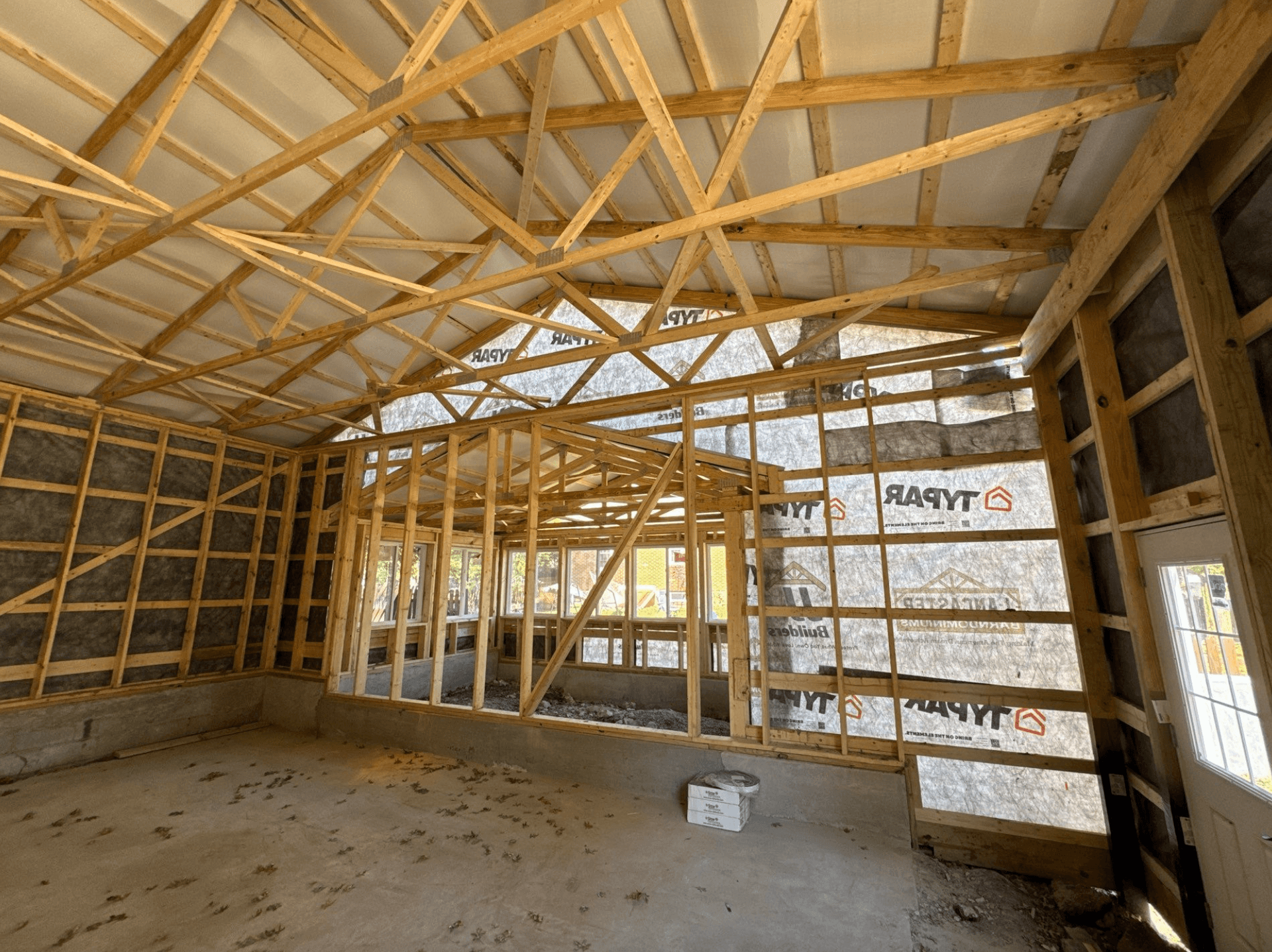
Post-frame buildings rely on a structural system designed to transfer building loads safely to the ground. Depending on the design, this system may include embedded posts, concrete foundations, trusses, connections, and other framing components. Damage to a critical component can affect the performance of the surrounding structure.
Posts may deteriorate because of prolonged moisture exposure, decay, insect activity, impact, or foundation movement. If a post becomes compromised, the building's ability to resist expected loads may be affected. The resulting problems can extend to connected framing, doors, walls, and roof components.
Warning signs may include doors that suddenly begin to bind, walls that appear to lean, gaps between structural components, or changes in the roofline. These symptoms can have several causes, so they should not automatically be attributed to structural failure. However, they warrant closer inspection, particularly when they appear alongside visible rot, water infiltration, or other damage.
Severe structural deterioration can increase the risk of roof sagging, wall movement, or partial collapse, especially under heavy snow loads or strong winds. Not every minor defect will lead to these outcomes, but postponing an assessment can make it harder to identify and address developing problems.
If you are considering a new barndominium or pole barn in Pennsylvania, quality materials, appropriate engineering, and proper construction practices are essential starting points. Even a well-built structure, however, needs regular attention when damage occurs.
Hidden Costs That Compound Over Time
The financial impact of delayed repairs can extend beyond the original problem. When damage spreads, property owners may face additional repair work, damaged contents, higher operating expenses, and disruptions to their normal activities.
Energy efficiency is one potential concern. Gaps in the building envelope, damaged insulation, and compromised moisture barriers can reduce a building's ability to maintain comfortable indoor temperatures. If you heat a workshop during winter or cool a workspace in summer, these problems may contribute to higher energy use. Addressing damaged components and restoring the building envelope can help reduce unnecessary energy loss.
Stored equipment and other contents may also be at risk. Agricultural machinery, vehicles, tools, inventory, and personal belongings can suffer damage when water enters through a leaking roof or wall. Depending on the circumstances, prolonged moisture exposure may contribute to corrosion, mold growth, or damage to electrical equipment. In agricultural buildings, water intrusion can also affect stored feed and other moisture-sensitive materials.
Insurance considerations deserve attention as well. Coverage depends on the policy, the cause of the damage, and the circumstances of the loss. Some policies limit coverage for damage associated with neglect or deferred maintenance. Review your policy and document existing damage with photographs, dates, and records of repairs. If you are unsure how a condition might affect coverage, consult your insurance provider.
Finally, consider the cost of losing access to your building. If a workshop becomes unsafe or a storage area can no longer protect its contents, you may need alternative storage, temporary workspace, or additional arrangements for equipment. These disruptions can add expenses that are easy to overlook when deciding whether to postpone a repair.
Addressing damage promptly does not eliminate every expense, but it can help prevent an existing problem from becoming more extensive and disruptive.
Weather Makes Everything Worse
Across Pennsylvania, Maryland, and New Jersey, post-frame buildings face changing weather conditions throughout the year. Rain, humidity, freezing temperatures, snow, and strong winds can all affect a building, particularly when an existing defect leaves it vulnerable to further damage.
During warm, humid weather, persistent moisture can contribute to wood deterioration and mold growth under suitable conditions. In colder months, water that enters cracks or gaps may freeze and expand, potentially worsening certain types of damage. Heavy rain can expose weaknesses in roofing, siding, flashing, and drainage systems, while strong winds can place additional stress on already damaged connections or panels.
Each season can introduce new challenges when a building remains unrepaired. A small opening that allows water inside during autumn may continue to admit moisture through winter and spring. Over time, repeated exposure can increase the likelihood of damage to surrounding materials.
This is especially important when it comes to roofing. Damaged roof panels, deteriorated flashing, or failed seals can allow water to reach roof framing and other interior components. Persistent moisture may damage trusses, purlins, insulation, and stored belongings. Having roofing problems assessed before they worsen can help limit the extent of repairs.
As temperatures drop and winter approaches, fall is a practical time to inspect your building's roof, siding, doors, drainage, and visible framing. Addressing identified problems before prolonged winter exposure may help protect the structure and its contents.
When to Act and What to Look For
The best time to investigate building damage is when you first notice it. Waiting for a quieter season or a more convenient time can allow the problem to continue, particularly when water infiltration or structural movement is involved.
Walk around your building periodically and look for changes such as:
Doors or windows that stick or bind: These may indicate shifting, settling, or changes in the openings.
Gaps between panels or at corners: Open seams can allow water and air to enter the building.
Rust streaks or interior staining: These may indicate moisture intrusion or corrosion.
Soft, damaged, or rotting wood: Deterioration near posts, framing, or other moisture-exposed areas deserves prompt attention.
Changes in the roofline or walls: Sagging, bowing, or visible movement may indicate a structural concern.
Loose fasteners or lifted panels: These can compromise the building envelope and may require repair.
Standing water around the building: Poor drainage can contribute to ongoing moisture exposure and soil-related problems.
If you notice any of these signs, take photographs and record when the problem appeared, if known. Avoid disturbing potentially unstable components or attempting repairs that could put you at risk. A qualified builder can assess the condition, determine whether the issue is cosmetic or structural, and recommend appropriate next steps.
For property owners throughout Pennsylvania, Maryland, and New Jersey, we believe that clear communication and practical recommendations are essential. At JJ Builders, our goal is to help you understand the condition of your building and make informed decisions about maintaining it.
Post-frame construction can provide decades of service when properly designed, built, and maintained. When damage occurs, however, it is important to understand what caused it and whether it affects the building's performance. Acting promptly can help protect your property, reduce the risk of further deterioration, and avoid unnecessary disruption.
If you have noticed damage to your pole barn, agricultural building, garage, or barndominium, contact our team to discuss your concerns. We bring a commitment to craftsmanship, overbuilt quality, and getting the job done right the first time to every project.
Visit the JJ Builders homepage to learn more about our construction services and approach to quality. You can also visit our Google Business Profile to learn more about our business.
Our work is backed by a 5-Year Workmanship Warranty, reflecting our commitment to standing behind our craftsmanship. If you are concerned about damage to your building, reach out to discuss your project and determine the appropriate next steps.
About JJ Builders
JJ Builders is a custom construction company based in Holtwood, Pennsylvania, serving clients throughout Pennsylvania, Maryland, and New Jersey. We specialize in pole barns, barndominiums, custom decks, and roofing, with a focus on quality craftsmanship, integrity, and customer satisfaction.